3D Printed Carbon Fiber Molds: Which Process Actually Works
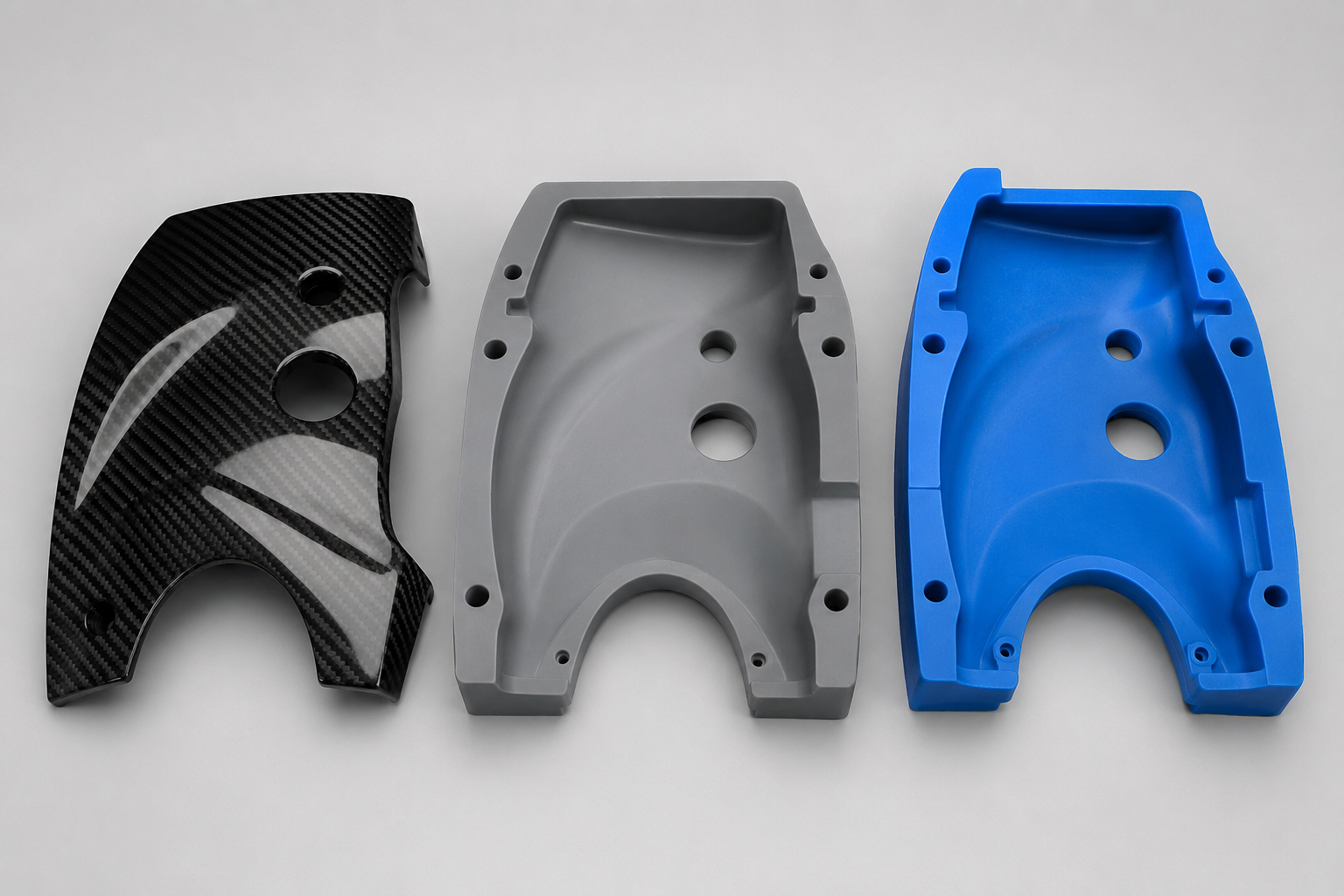
3D printed carbon fiber molds are becoming a standard way to build layup tooling faster and cheaper than CNC-machined or hand-carved molds. The question most engineers run into next is which 3D printing process to use, since not every process produces a mold that can hold up to a layup.
The Three Process Options
There are three additive processes commonly considered for 3D printed carbon fiber molds: SLA, SLS, and FDM/FFF. Each produces a different result.
SLA (Stereolithography)
SLA cures liquid resin layer by layer with a laser or light source. It produces the smoothest surface finish and the tightest dimensional accuracy of the three, which is why it is the process most commonly used for layup molds.
SLS (Selective Laser Sintering)
SLS fuses powdered material with a laser. SLS parts come out with a porous, slightly grainy surface. That texture transfers to the part during layup, so SLS molds usually need sanding and sealing before use, and the finish still rarely matches SLA.
FDM/FFF (Fused Deposition Modeling / Fused Filament Fabrication)
FDM/FFF extrudes melted filament through a nozzle, layer by layer. It is the cheapest and most accessible option, but the layer lines print directly onto the part unless the mold is sealed and finished afterward, and it has the lowest heat resistance of the three.
Why SLA Is the Process Used for Layup Molds
A layup mold’s surface becomes the part’s surface. Any texture, porosity, or layer lines in the mold print directly into the carbon fiber part. SLA’s smooth finish is the main reason it is the default choice for layup tooling: it needs little to no post-processing to be layup-ready, and it holds tighter tolerances on complex geometry than SLS or FDM.
SLA also has engineering resins built specifically for tooling, which matters for the next decision: which resin to use for a given cure temperature.
Matching the Resin to the Cure
Not every SLA resin can handle a carbon fiber cure. The two variables that matter are the process, wet layup or prepreg, and the cure temperature it requires.
Wet layup involves brushing epoxy resin onto dry carbon fiber fabric laid over the mold, then curing at or near room temperature. Standard SLA resin handles this without issue.
Prepreg uses fabric pre-impregnated with resin, which needs heat and usually a vacuum bag to cure properly. This calls for a resin with a higher heat deflection temperature (HDT). High temp SLA resins reach an HDT of around 238°C, which covers most prepreg cure cycles.
Higher-HDT resins come with a tradeoff: they are more brittle than standard resin. Molds printed in high temp resin can crack under the combined stress of heat and vacuum bag pressure, especially over repeated cycles. Matching resin brittleness to the actual cure conditions, instead of defaulting to the highest HDT available, reduces that risk.
Where 3D Printed Molds Fit and Where They Don’t
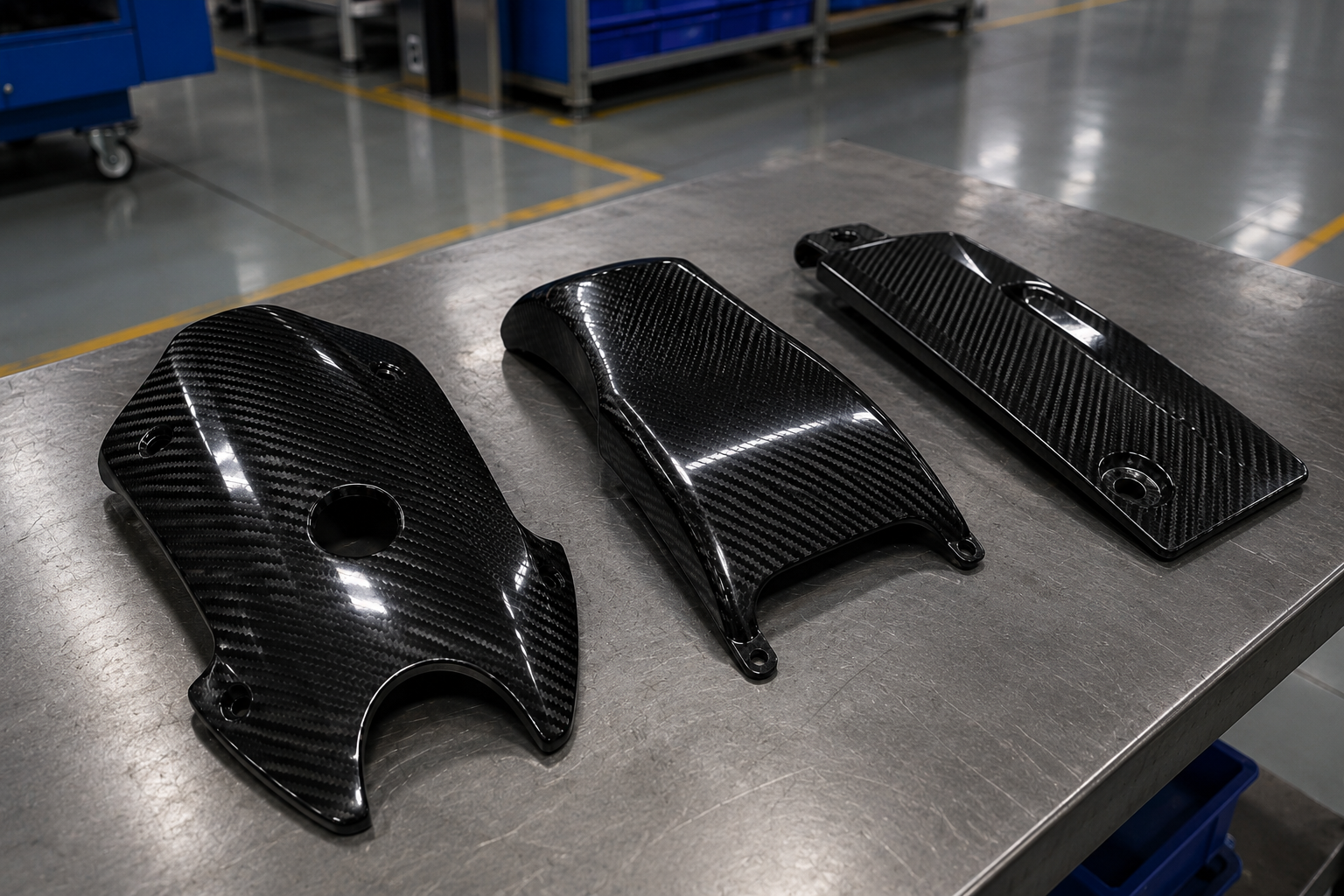
3D printed carbon fiber molds work well for prototypes, low-volume runs, and design iteration, where the speed and cost savings over CNC-machined metal tooling matter most. They are not a replacement for metal tooling in high-volume production. Print resolution limits surface finish compared to polished metal, mold lifespan is shorter, and repeated high-heat, high-pressure cycles like autoclave curing wear down a printed mold faster than they wear down aluminum or steel.
For a prototype run or first article, that tradeoff is usually worth it. For a production part running hundreds of cycles, it isn’t.
Summary
For 3D printed carbon fiber molds, SLA is the process to start with. It gives the surface finish and accuracy layup molds need with the least post-processing. SLS works if a rougher surface is acceptable after finishing, and FDM/FFF is the lowest-cost option for parts where finish and heat resistance matter least. Matching the resin to the cure, wet layup versus prepreg, is the next decision that determines whether the mold survives the process.
Parts and molds like these can be instantly quoted through OpusFab, with 3D printing and CNC machining both available from a single instant quote.