Common Finishes for CNC Machined Aluminum 6061
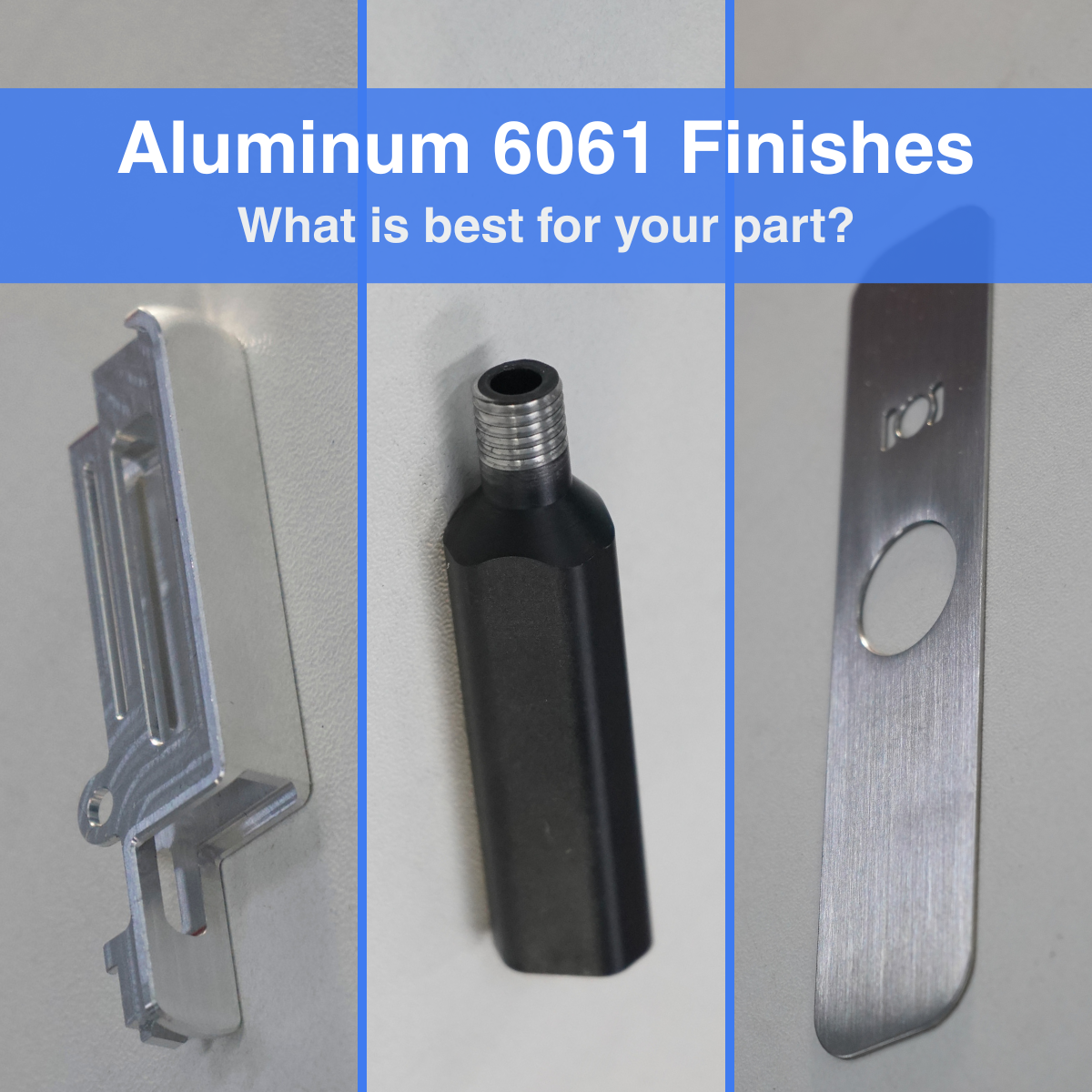
Aluminum 6061 is one of the most widely used alloys in CNC machining. It machines well, holds tight tolerances, and offers a good balance of strength and weight. Once an aluminum 6061 part is machined, the surface finish determines how it looks, how it resists corrosion, how it wears, and in some cases how it conducts electricity or heat. Below are the most common aluminum 6061 finishes used in production, along with what each one does.
As-Machined (Mill Finish)
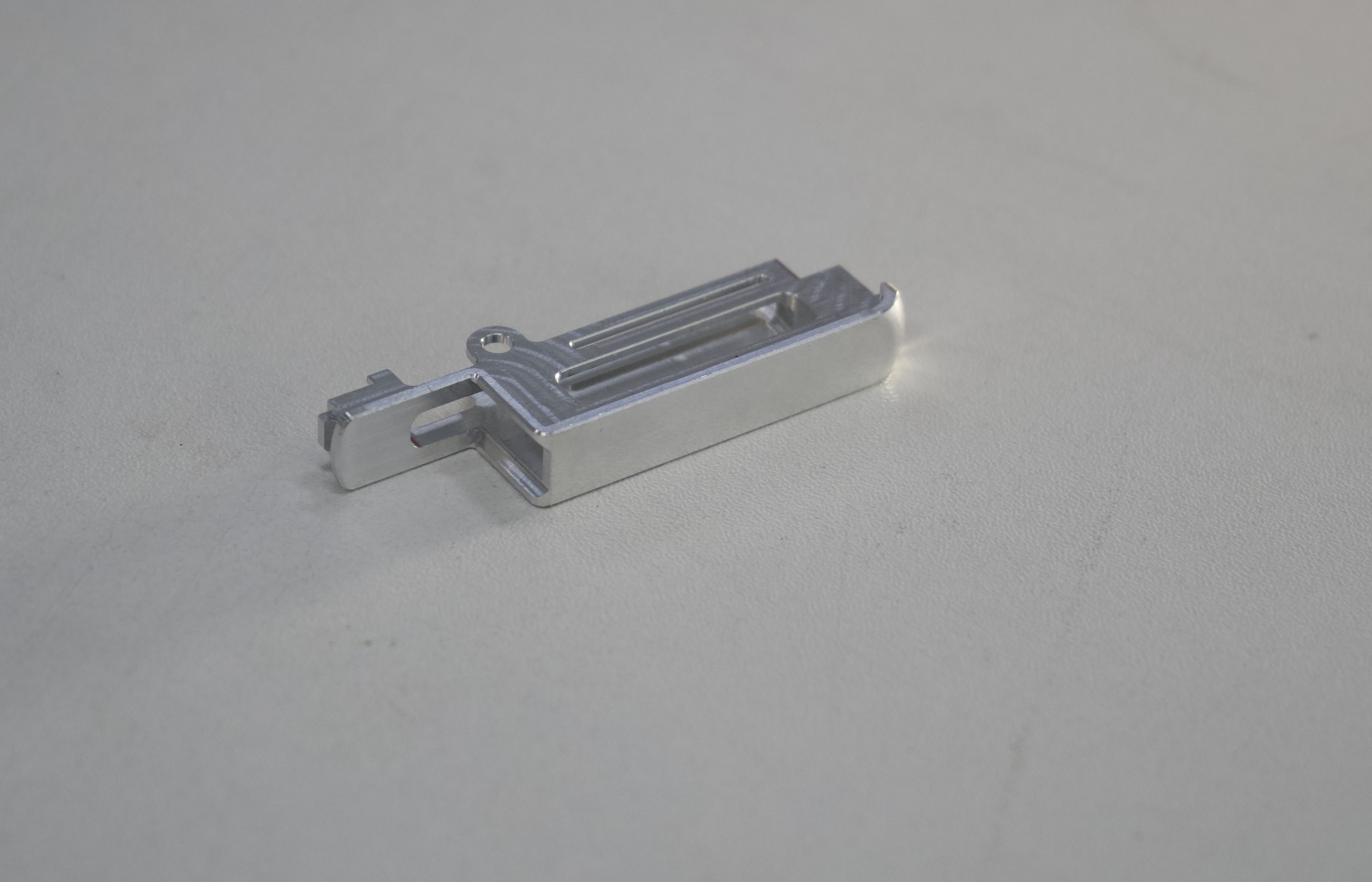
This is the mill finish left on aluminum 6061 directly by the cutting tool, with no secondary processing. It shows visible tool marks and can have sharp burrs on edges that need deburring. As-machined aluminum 6061 is the cheapest and fastest option, and it is often chosen for internal components or prototypes where appearance and corrosion resistance are not priorities.
Common Use Cases
- Internal or hidden aluminum 6061 components not visible in the final assembly
- Prototypes and low-volume test parts
- Structural brackets inside enclosures
- Parts that need to move to assembly quickly without added lead time
Main Benefits
- Lowest cost option since no secondary process is required
- Fastest turnaround time for aluminum 6061 parts
- Keeps the tightest dimensional tolerances since nothing is added or removed from the surface
- Preserves the part’s natural electrical conductivity
Bead Blasting
Bead blasting fires small glass beads at an aluminum 6061 surface using compressed air. This process removes tool marks and creates a uniform, matte, slightly textured surface. It is a common step before anodizing aluminum 6061, since it produces a consistent look across the part. On its own, bead blasting does not add corrosion resistance.
Common Use Cases
- Consumer electronics housings
- Aluminum 6061 parts that will be anodized afterward for a uniform look
- Cosmetic parts where visible tool marks are not acceptable
- Automotive trim and brackets
Main Benefits
- Creates a consistent matte texture across the whole aluminum 6061 part
- Hides minor tool marks and surface imperfections
- Adds no meaningful thickness and does not change part dimensions
- Improves surface uniformity ahead of dyeing or coating
Sandblasting
Sandblasting, also called abrasive blasting, propels a stream of abrasive media at an aluminum 6061 surface under high pressure. It is more aggressive than bead blasting and leaves a rougher, more matte texture on aluminum 6061 parts. It is commonly used to strip old coatings, remove heavier tool marks, or prepare a surface for paint or powder coat. Because the abrasive media varies (sand, aluminum oxide, or other grit), the resulting texture and roughness can be adjusted by changing the media type and size.
Common Use Cases
- Stripping old paint or coatings before refinishing
- Preparing aluminum 6061 surfaces for powder coating or paint adhesion
- Removing rust, oxidation, or heavier surface contamination
- Texturing parts that do not require a fine cosmetic finish
Main Benefits
- Removes coatings and contamination from aluminum 6061 quickly
- Improves adhesion for paint or powder coat
- Roughness can be adjusted by changing the abrasive media
- Works well on larger parts and batch processing
Anodizing (Type II)
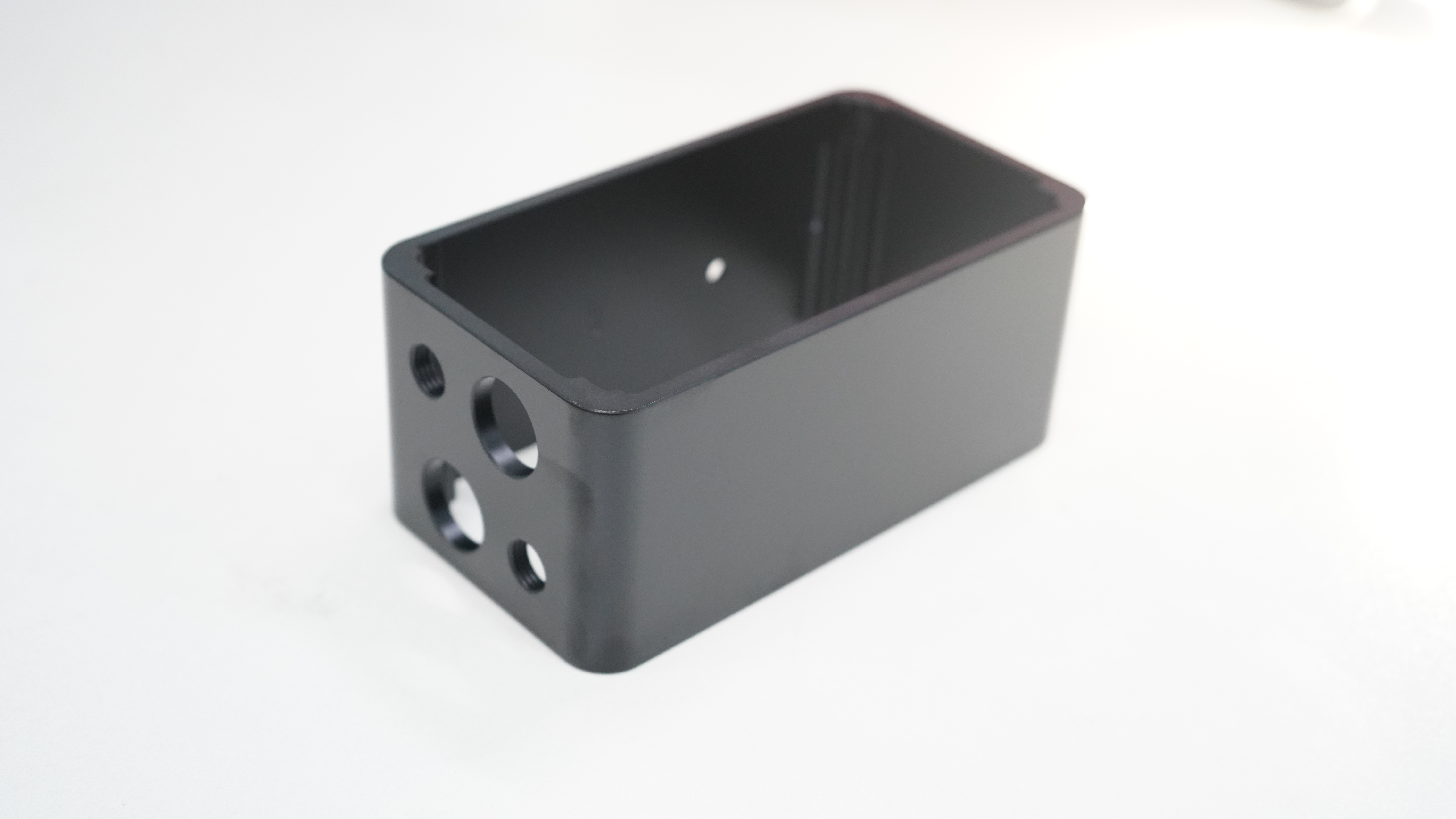
Type II anodizing is an electrochemical process that grows a layer of aluminum oxide on the surface of the part. On aluminum 6061, this oxide layer is harder than the bare metal and improves corrosion resistance. The layer is porous before sealing, which allows it to be dyed in colors such as black, red, or blue. Type II anodizing is typically a few thousandths of an inch thick and is one of the most common aluminum 6061 finishes for consumer and industrial parts.
Common Use Cases
- Consumer products and enclosures that need color
- Aerospace and electronics parts that need corrosion resistance
- Aluminum 6061 parts requiring a decorative, dyed finish
- Medical device housings
Main Benefits
- Improves corrosion resistance
- Allows a wide range of dye colors
- Adds a harder, more wear resistant surface than bare aluminum 6061
- Adds only a few thousandths of an inch to part dimensions
Hard Anodizing (Type III)
Hard anodizing is similar to Type II but produces a thicker, denser oxide layer on aluminum 6061, generally in the range of 0.002 to 0.004 inches. This makes it more resistant to wear and abrasion, which is why it is used on parts that experience friction or repeated contact, such as pistons, gears, and tooling. Hard anodized aluminum 6061 parts are usually gray or black and are harder to dye in bright colors compared to Type II.
Common Use Cases
- Pistons, gears, and cylinders subject to friction
- Tooling and fixtures that see repeated wear
- Firearm components
- Hydraulic and pneumatic parts
Main Benefits
- Provides superior wear and abrasion resistance
- Increases surface hardness compared to Type II
- Improves the corrosion resistance of aluminum 6061 in demanding environments
- Extends the service life of moving or high-friction parts
Chromate Conversion Coating (Chem Film / Alodine)
This process applies a thin chromate conversion coating to the aluminum 6061 surface, often referred to by the brand name Alodine. It improves corrosion resistance and, importantly, keeps the part electrically conductive, which anodizing does not. For this reason, chromate conversion is a common aluminum 6061 finish on electronics enclosures, brackets, and parts that need grounding or shielding. It is usually a clear or light gold color and is much thinner than anodizing.
Common Use Cases
- Electronics enclosures that need grounding
- Aerospace and defense components made from aluminum 6061
- Parts that need a paint or primer base coat
- RF shielding and EMI applications
Main Benefits
- Preserves electrical conductivity
- Improves corrosion resistance without adding measurable thickness
- Provides a strong base for paint or adhesive bonding
- Meets common military and aerospace specifications such as MIL-DTL-5541
Powder Coating
Powder coating applies a dry powder to an aluminum 6061 part, which is then cured under heat to form a hard, durable outer layer. It is thicker than anodizing and available in a wide range of colors and textures, including matte, gloss, and textured finishes. Powder coating is a good option for aluminum 6061 parts that need strong resistance to scratches, chemicals, and weather, such as outdoor equipment or enclosures. Because the coating adds thickness, it is generally not used on parts with tight tolerances.
Common Use Cases
- Outdoor equipment and enclosures
- Consumer products that need durable color
- Automotive and industrial parts exposed to the elements
- Furniture and architectural components
Main Benefits
- Highly durable and resistant to chipping
- Wide range of colors and textures available
- Strong resistance to chemicals, UV exposure, and weather
- Produces less waste than wet paint since overspray can be reclaimed
Polishing
Polishing uses abrasive wheels or compounds to smooth and brighten an aluminum 6061 surface, ranging from a satin finish to a mirror-like shine. It is mainly used for appearance rather than corrosion resistance, and it is common on aluminum 6061 parts that are visible in a final product, such as consumer goods or display components. Polished aluminum 6061 can be anodized afterward to lock in the shine while adding some protection.
Common Use Cases
- Consumer-facing products and displays
- Medical and food-grade equipment
- Decorative trim
- Parts that need a mirror or high-gloss look
Main Benefits
- Improves appearance and reflectivity
- Removes surface scratches and imperfections
- Can be combined with anodizing for a bright, protected finish
- Improves how easily the surface can be cleaned
Brushed Metal Finish
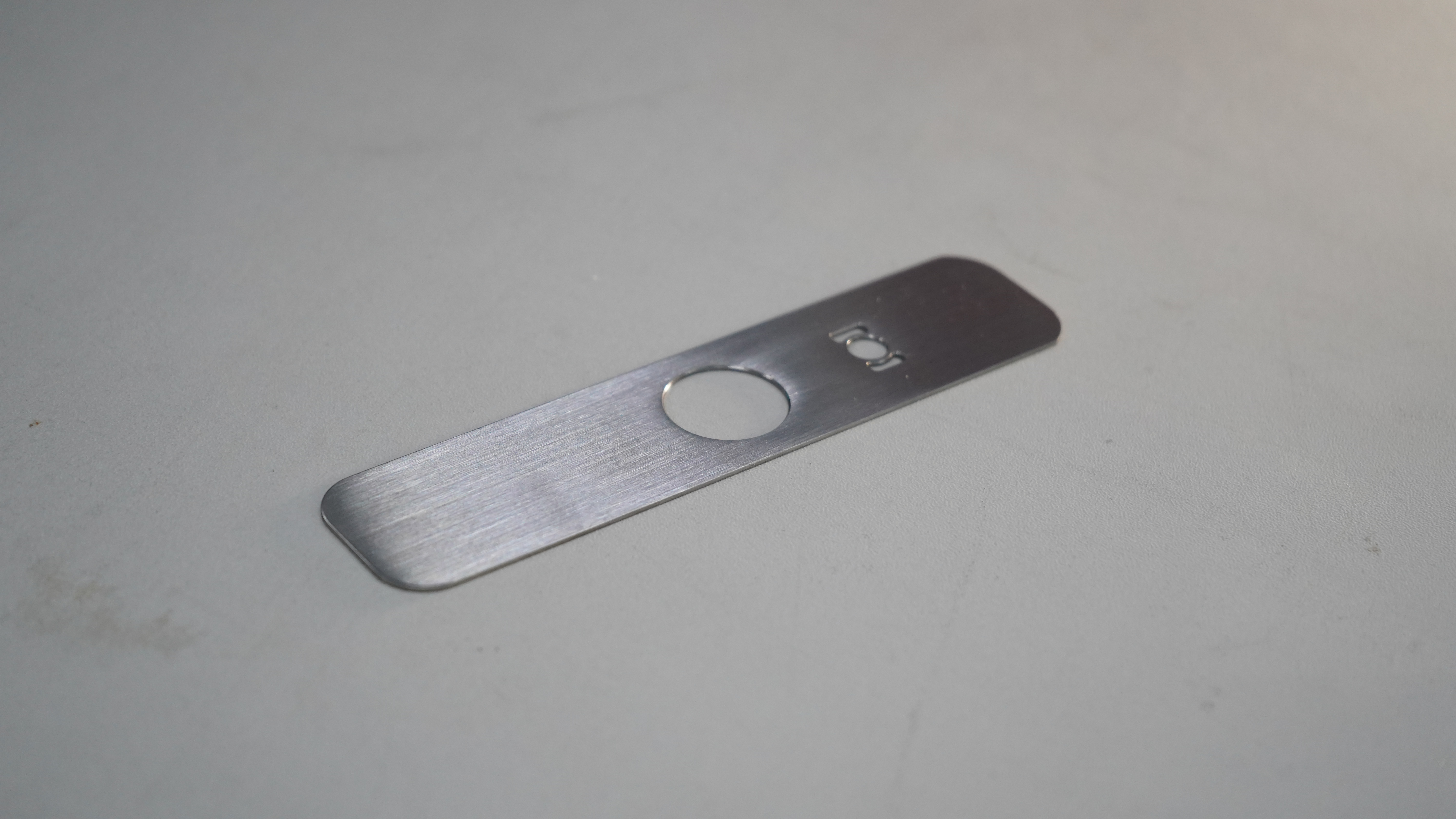
A brushed finish is created by moving an abrasive belt or wheel across an aluminum 6061 surface in a single direction. This leaves a pattern of fine, parallel lines and gives the part a satin appearance rather than a reflective one. It removes light tool marks and minor surface defects while giving aluminum 6061 parts a consistent, directional look. Brushed aluminum 6061 can be anodized afterward, which lets the anodizing color show through the brushed texture.
Common Use Cases
- Consumer electronics and laptop housings
- Architectural panels and trim
- Appliance and fixture surfaces
- Automotive interior and trim components
Main Benefits
- Hides fingerprints and minor scratches better than a polished surface
- Reduces glare compared to a mirror or bead blasted finish
- Gives the part a consistent, directional appearance
- Can be combined with anodizing to add color while keeping the brushed texture
Choosing a Finish
The right aluminum 6061 finish depends on what the part needs to do. If corrosion resistance and color matter most, anodizing is usually the choice. If the part needs to stay electrically conductive, chromate conversion coating is a better fit. If the part will see heavy wear, hard anodizing holds up best. And if cost and speed matter more than appearance, an as-machined, bead blasted, or sandblasted finish is often enough. If the aluminum 6061 part is visible in a final product and needs to hide fingerprints and light scratches, a brushed finish is a common choice.