What the New US Ban on Foreign-Made Humanoid Robots Means for American Hardware Companies
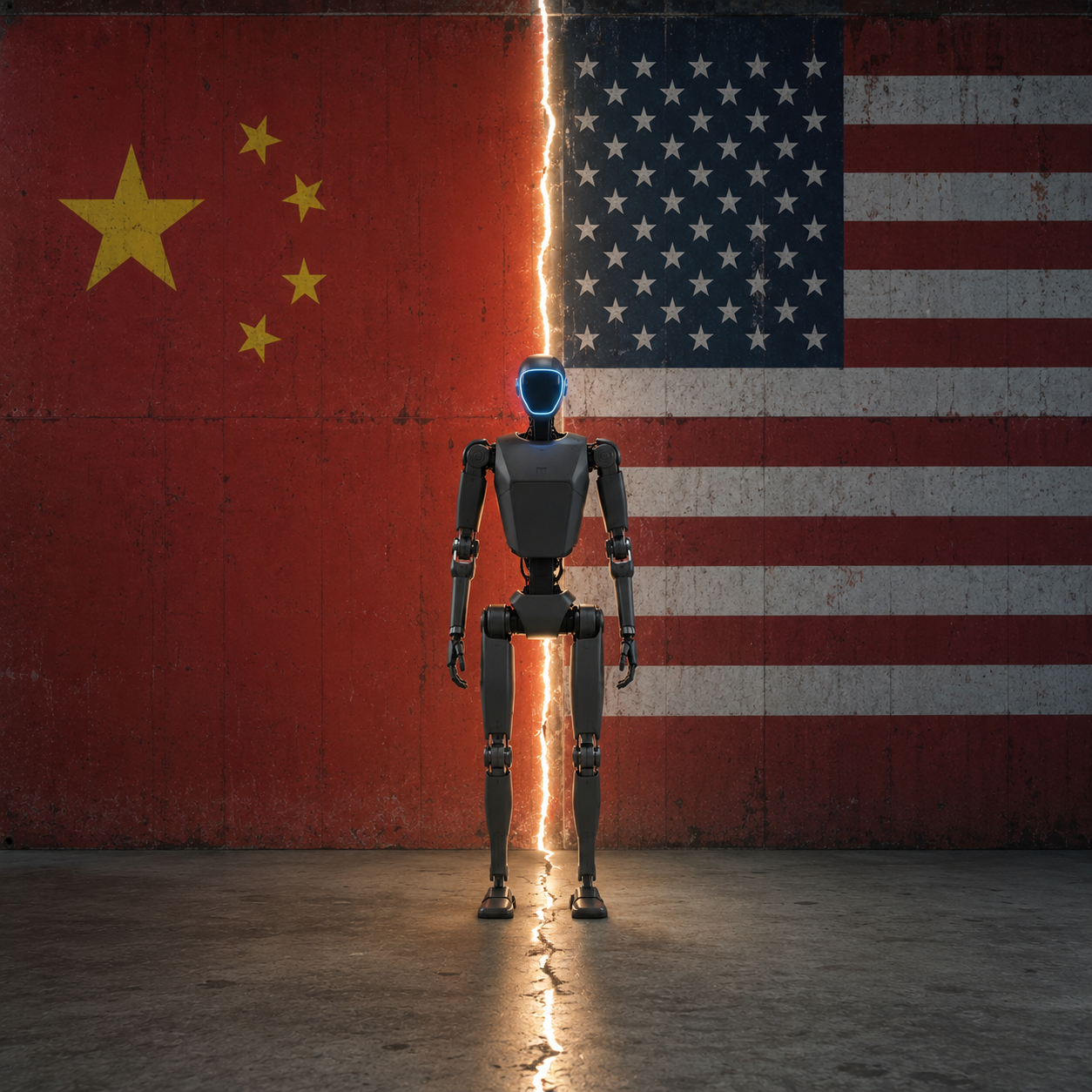

On July 28, 2026, the Federal Communications Commission (FCC) blocked new humanoid robots, quadruped robots, and power inverters made in China from entering the US market. The move goes after a market China has run away with for years. Here’s what actually changed, and what it means for US robotics and hardware companies.
What Happened
The FCC added these devices to its Covered List after a national security review found they carry supply chain and cybersecurity risks (ABC News; BBC News; Reuters).
Here’s what the ban actually does. New robot and inverter models can’t get the FCC authorization needed to sell in the US. Anything already authorized keeps selling. Federal government purchases are exempt entirely (FCC Covered List FAQ).
Manufacturers can still apply for a case-by-case exemption. Robots go through the Department of War, and inverters go through DHS or the Department of War (Fox Business). The FCC has used this same Covered List tool before, against Huawei gear starting in 2021, Chinese drones in December 2025, and Chinese routers in March 2026. This is the first time it hits humanoid and quadruped robots.
The timing lines up with where the market actually stands. China holds around 85 percent of humanoid robot deployments worldwide. In 2025, Unitree and AGIBOT each shipped more than 5,000 humanoid units, while Tesla and Figure AI shipped a few hundred combined (ABC News). Morgan Stanley expects the market to hit $15 billion by 2030. Some US hardware is already tangled up in this: Nvidia’s humanoid reference design, shown off in June, runs on a Unitree chassis (AP News), and Unitree had just launched commercially in Europe on July 22, six days before the ban shut down its US plans (TechTimes).
The ban lands about six weeks before a planned September meeting between Trump and Xi, and comes alongside talk of restricting Chinese open-source AI models too (ABC News).
What US Robotics and Hardware Companies Can Do
This opens up real space in the US market. What a company does with it is a separate question from the policy itself.
File for FCC Equipment Authorization on New Models Now
The ban only blocks new models going forward. Companies with new robots ready to go should get authorization filed now, while Chinese competitors are stuck waiting on Conditional Approval (FCC Covered List FAQ).
Audit the Supply Chain for Foreign-Sourced Power Electronics
Power inverters made the list too, separately from robots. Anyone using foreign inverters in charging systems, battery packs, or motor drives should find out where that exposure sits and line up authorized domestic alternatives before it turns into a bottleneck (FCC Fact Sheet).
Review Dependencies on Foreign Chassis Platforms and Reference Designs
Some US hardware already runs on Chinese chassis, like Nvidia’s reference design built on a Unitree platform (AP News). Anyone using or considering a similar setup should check whether it needs its own Conditional Approval, and start looking at alternatives now.
Treat Manufacturing Capacity, Not Policy, as the Real Constraint
The ban clears out import competition, but it doesn’t touch the cost and scale advantage China built over years of high-volume production. The closest comparison is the FCC’s drone ban on DJI from December 2025. That ban opened up a huge opportunity for US drone makers, but the supply chain for things like rare earth magnets and batteries stayed dependent on China, and closing that gap has taken billions in new domestic investment (The Next Web). How much of this market a company actually captures comes down to how fast it can go from prototype to certified, sellable hardware, not the ban itself.
Track Early Conditional Approval Decisions
This process is brand new, so the first rulings will show what the ban really covers in practice. Watch which devices and components get exemptions from the Department of War or DHS (FCC Covered List FAQ).
Monitor the Policy Calendar
This is one move in a longer string of trade restrictions between the two countries, and it’s landing right before a Trump-Xi meeting planned for September. One analyst called it part of “a steady drumbeat of potential flashpoints” ahead of that meeting (ABC News). The scope and enforcement of this ban could still change.
Conclusion
The FCC just knocked the two biggest suppliers of new humanoid and quadruped robots out of the US market, in a category China has controlled about 85 percent of. That’s a real opening for US robotics and hardware companies. Who actually benefits comes down to speed: getting new models authorized fast, cleaning up supply chain exposure to the same foreign components now under review, and scaling domestic manufacturing to meet demand the ban just freed up.